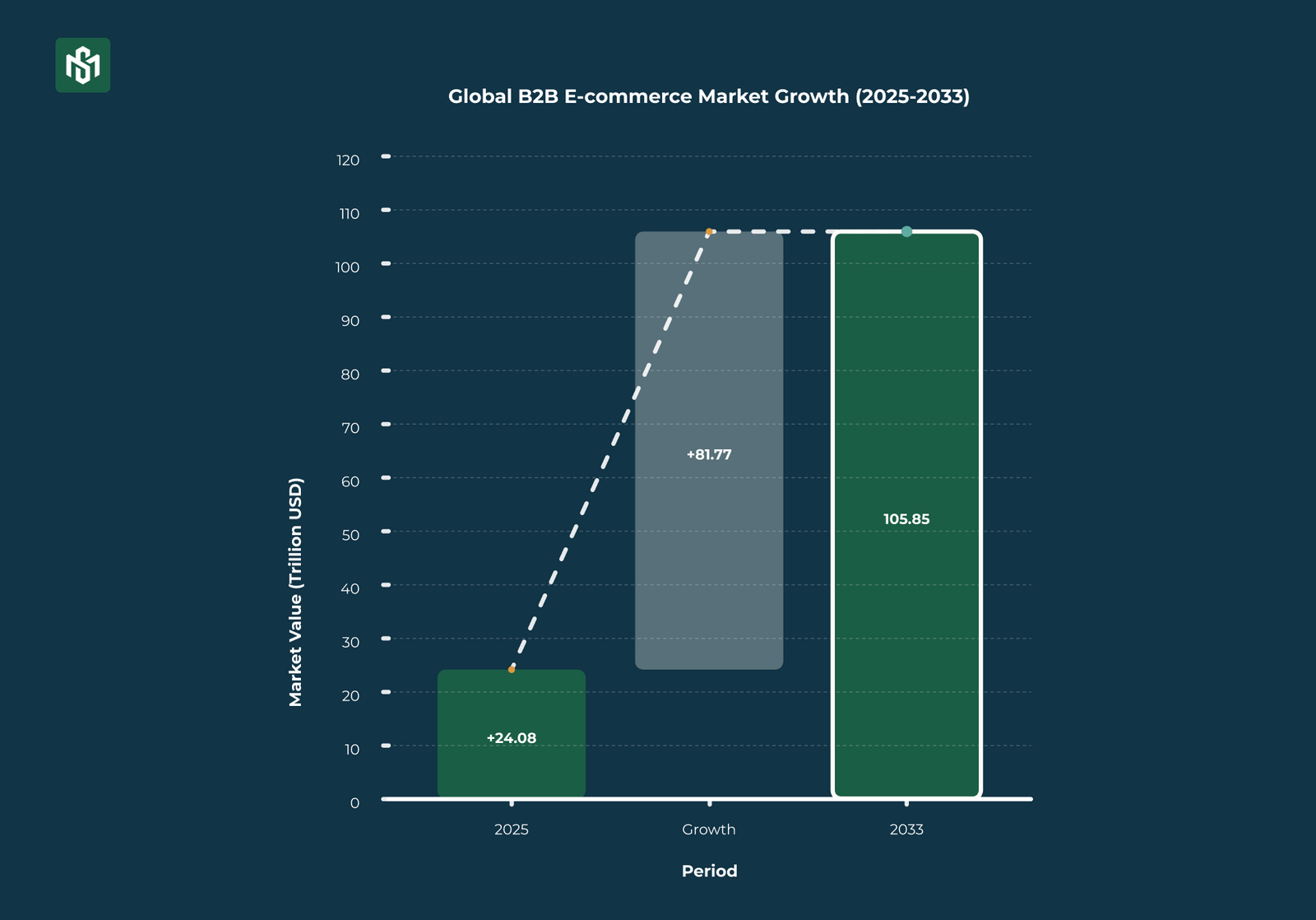
The global B2B e-commerce market hit $24.08 trillion USD in 2025.
That’s not a typo.
To put that in perspective: B2B e-commerce is several times larger than the entire B2C market and it’s growing at 20.9% per year.
Yet most people still think of e-commerce as Amazon Prime deliveries and Shopify storefronts.
In this guide, I’m going to show you EXACTLY what B2B e-commerce is, how it works, and why it’s the biggest opportunity in digital commerce right now.
Let’s dive right in.
What Is B2B E-Commerce?
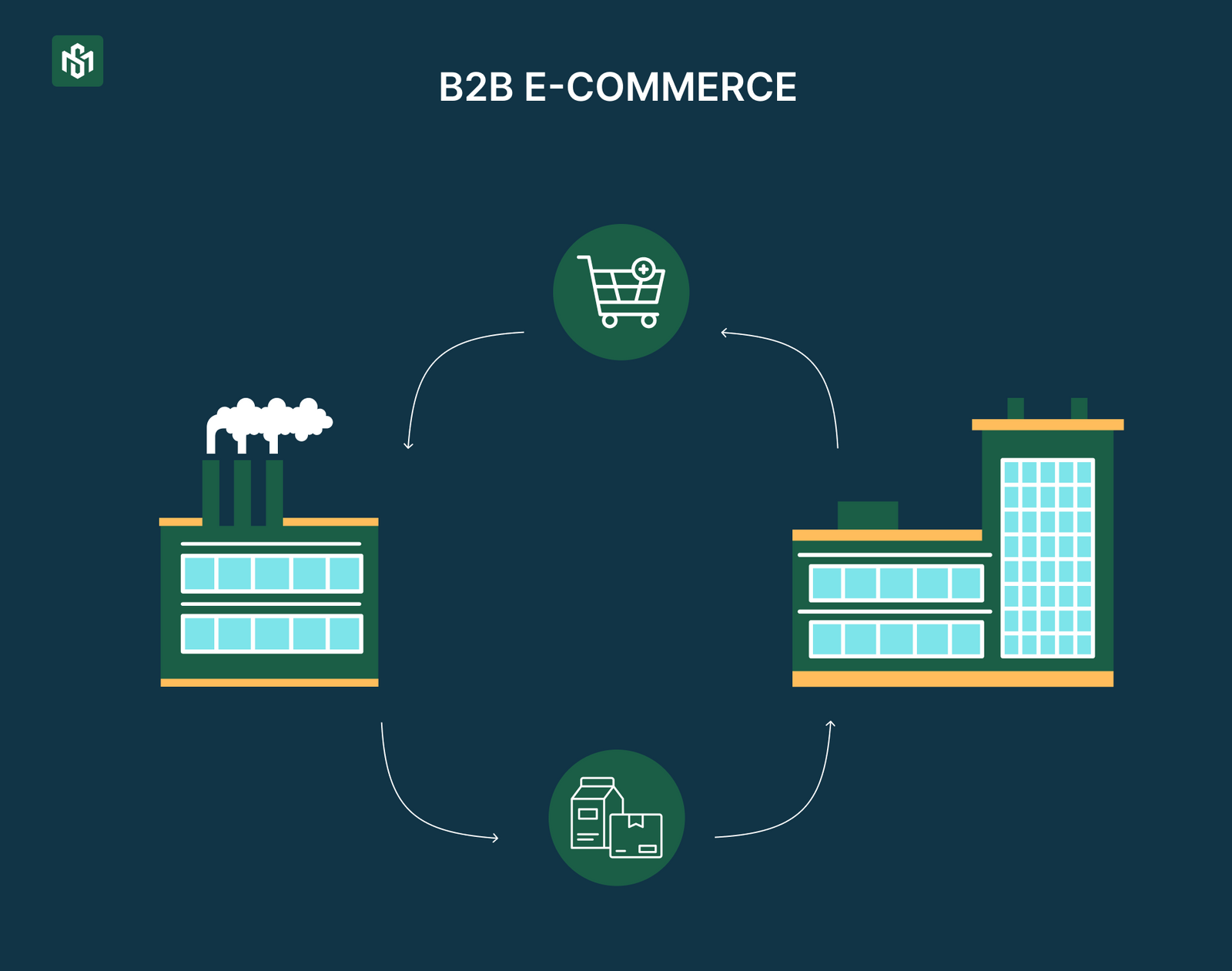
B2B e-commerce is the online buying and selling of goods or services between businesses, not to individual consumers.
Instead of a customer adding a product to their cart and checking out in two minutes, B2B transactions involve bulk orders, negotiated prices, purchase approvals, and complex logistics.
Think: a manufacturer selling components to a factory. A wholesaler selling 10,000 units to a retail chain. A SaaS company selling software seats to a corporation.
The platform might look like a standard online store. But under the hood, it’s running customer-specific pricing, ERP integrations, credit terms, and multi-user approval workflows.
That’s B2B e-commerce.
The 4 Key Players in the B2B Supply Chain
Before we go further, you need to understand who’s actually buying and selling in B2B e-commerce.
There are four main roles and most businesses play more than one
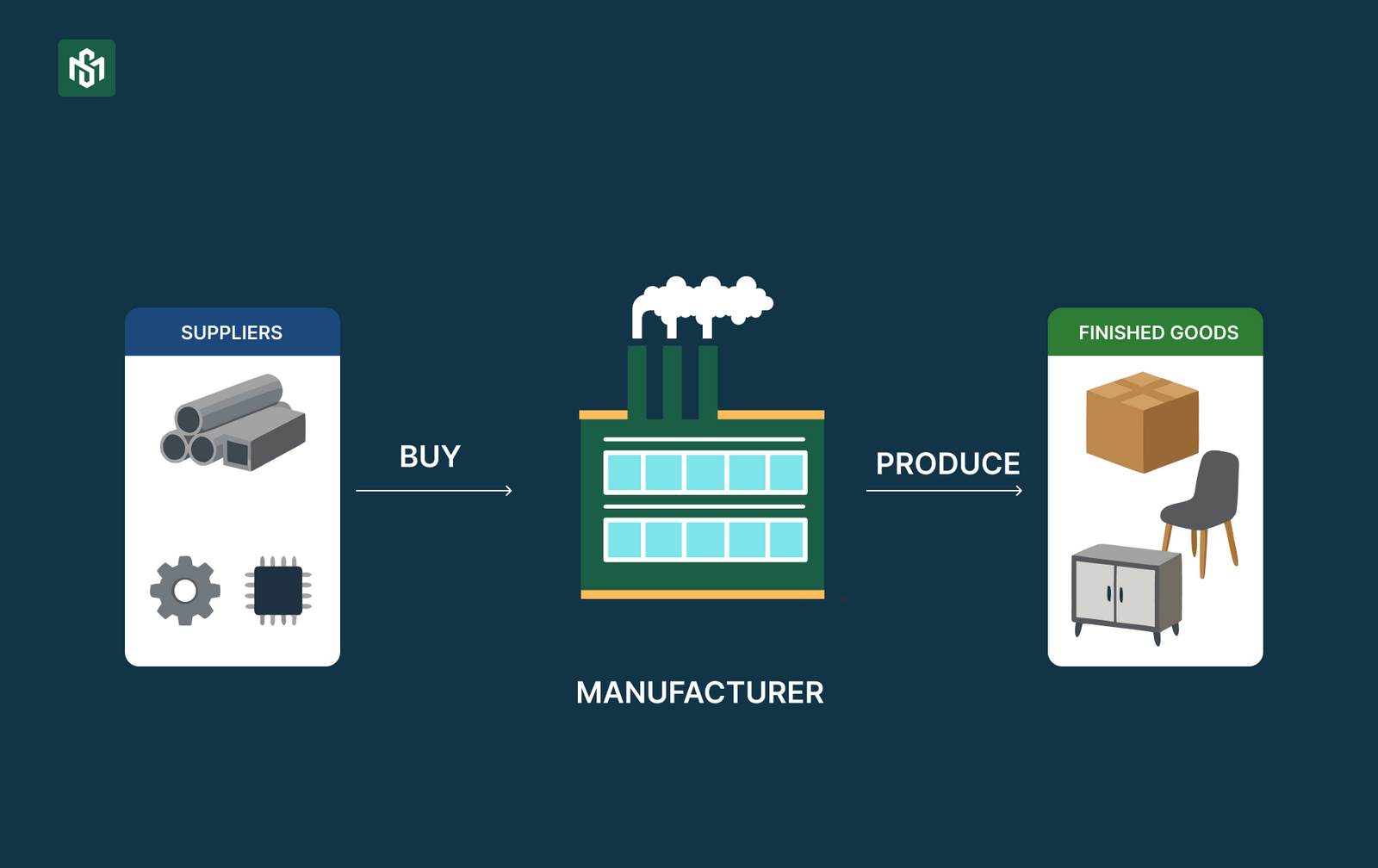
1. Manufacturers
Manufacturers buy raw materials and components to produce goods. Then they sell those finished goods upstream to distributors, wholesalers, or large retailers through B2B portals and platforms.
They’re both buyers AND sellers in the B2B world.
2. Distributors
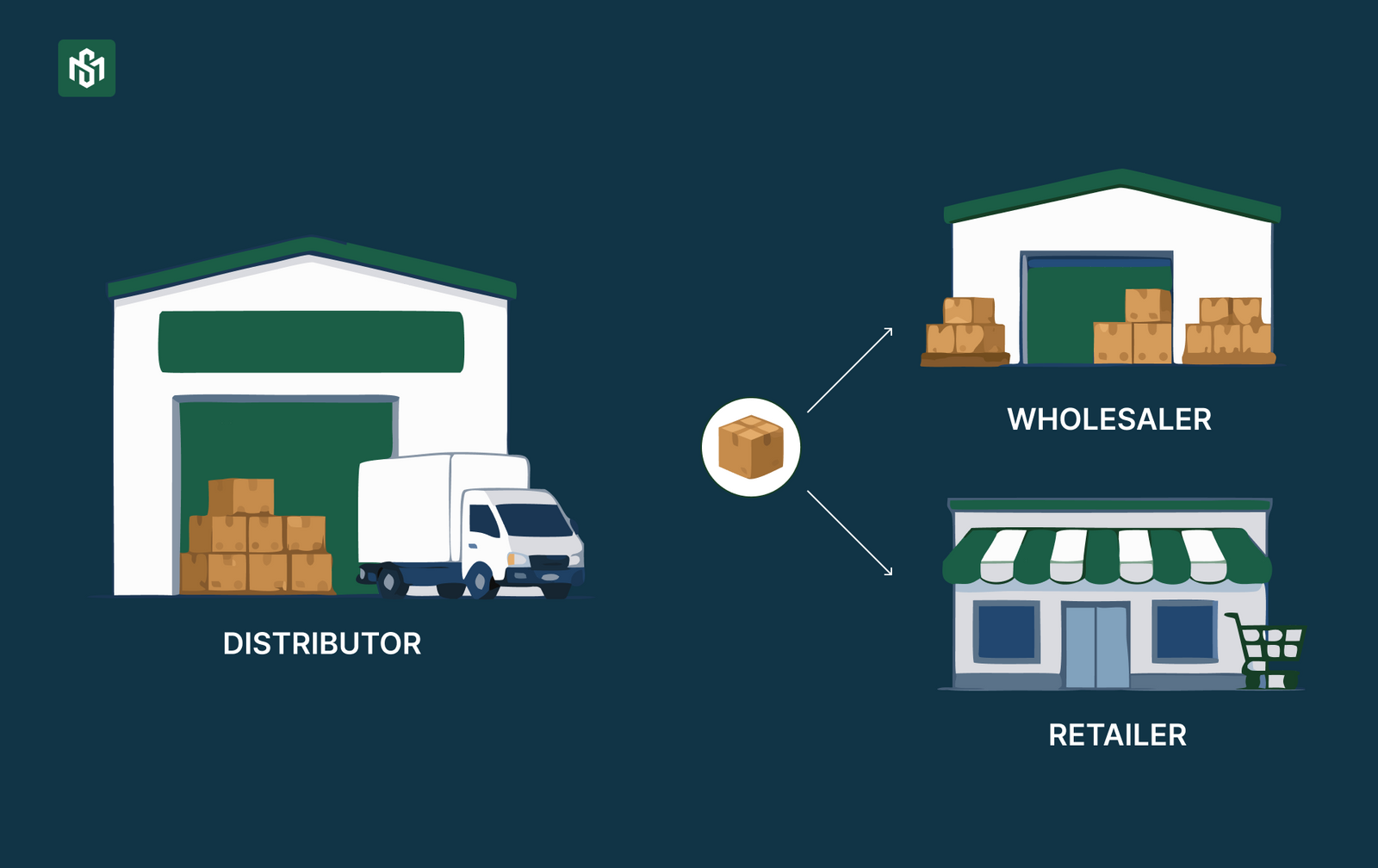
Distributors buy finished products from manufacturers in bulk, usually for a specific territory or customer segment.
Then they resell to wholesalers, retailers, or business end-users, often handling local stock, logistics, and sometimes installation or service.
3. Wholesalers
Wholesalers buy large volumes and sell smaller lots to retailers or other businesses at discounted prices.
Their game is bulk B2B and efficient distribution, not selling to consumers.
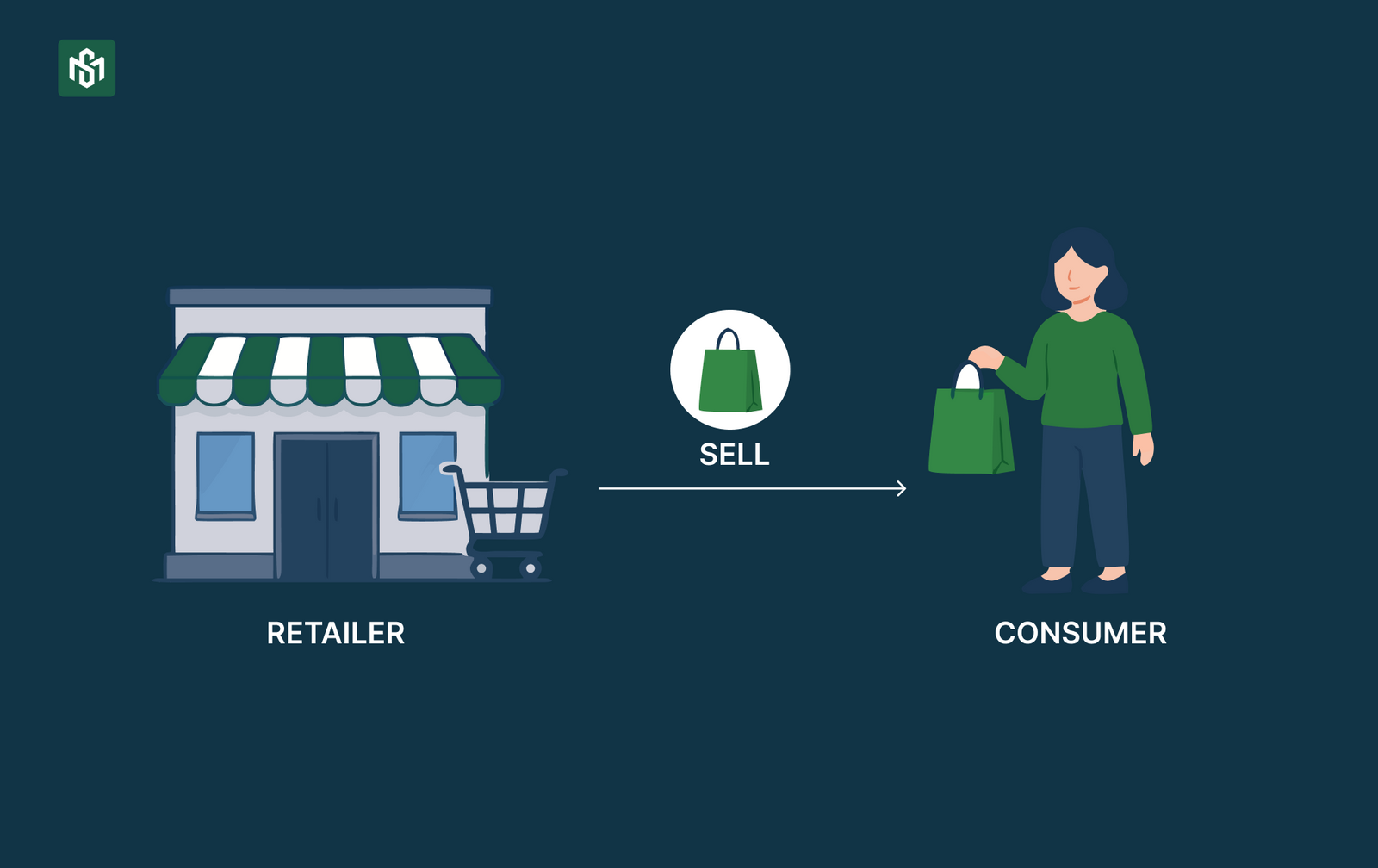
4. Retailers
Retailers are B2C sellers (they sell to consumers). But when they’re buying inventory from wholesalers or manufacturers, they’re acting as B2B buyers.
So a retailer on Shopify might run a B2C storefront and simultaneously be a B2B buyer in their supply chain.
B2B vs. B2C E-Commerce: The 5 Core Differences
A lot of people treat these as the same thing with different logos.
They’re not.
Here’s exactly how they’re different:
Who You Sell To?
- B2B: Your customer is a business manufacturer, wholesaler, retailer, corporate buyer, government agency.
- B2C: Your customer is an individual buying for personal use.
Order Size and Pricing
- B2B:Fewer customers, but HUGE order values. Pricing is negotiated, tiered by volume, or set by contract. One customer might be worth $500K per year.
- B2C: Millions of customers, but small orders. Pricing is fixed and visible to everyone.
The Buying Process
This is the biggest difference.
- B2B: Buying involves multiple stakeholders, formal approval workflows, and weeks or months of decision-making. A single purchase might require sign-off from procurement, finance, and a VP.
- B2C: One person decides, often in minutes. Sometimes on impulse.
Relationship Dynamics
- B2B: Long-term partnerships. Account managers. Repeat orders that last years. The relationship is often more valuable than any single transaction.
- B2C:The focus is attracting volume and converting fast. Customer relationships are often transactional.
Platform Features
- B2B: Platforms need logins, role-based access, purchase orders, payment terms, and ERP/CRM integration.
- B2C: Platforms need beautiful storefronts, simple search, fast checkout, and standard payment methods.
Why B2B E-Commerce Is Growing So Fast
Here’s a stat that stops most people cold.
The global B2B e-commerce market was $24.08 trillion USD in 2025 and it’s projected to reach $105.85 trillion USD by 2033.
That’s a compound annual growth rate of 20.9%.
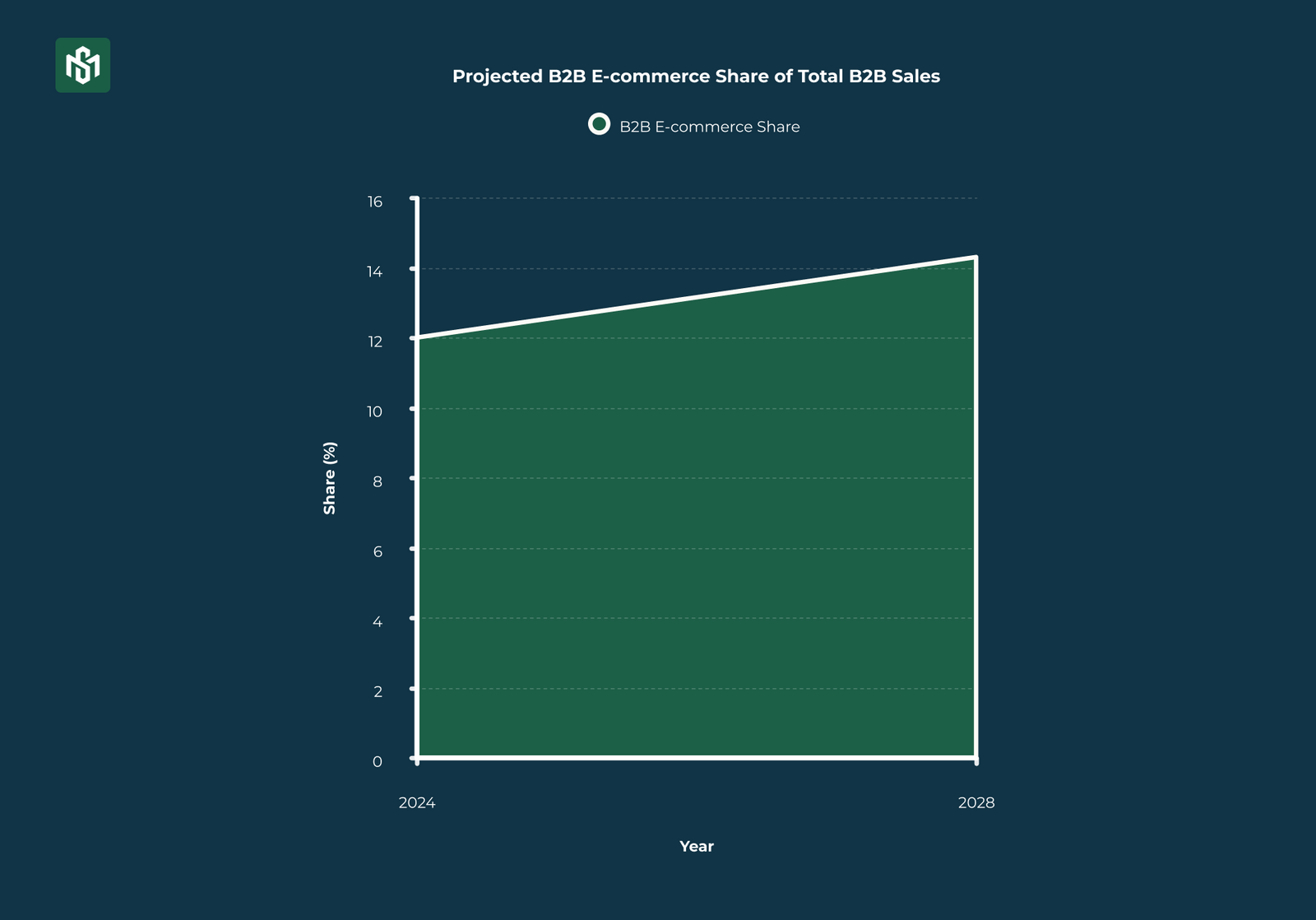
In the US alone, B2B e-commerce site sales hit $2.297 trillion USD in 2024. By 2028, B2B e-commerce is expected to account for 14.3% of all B2B product salesup from 12% in 2024
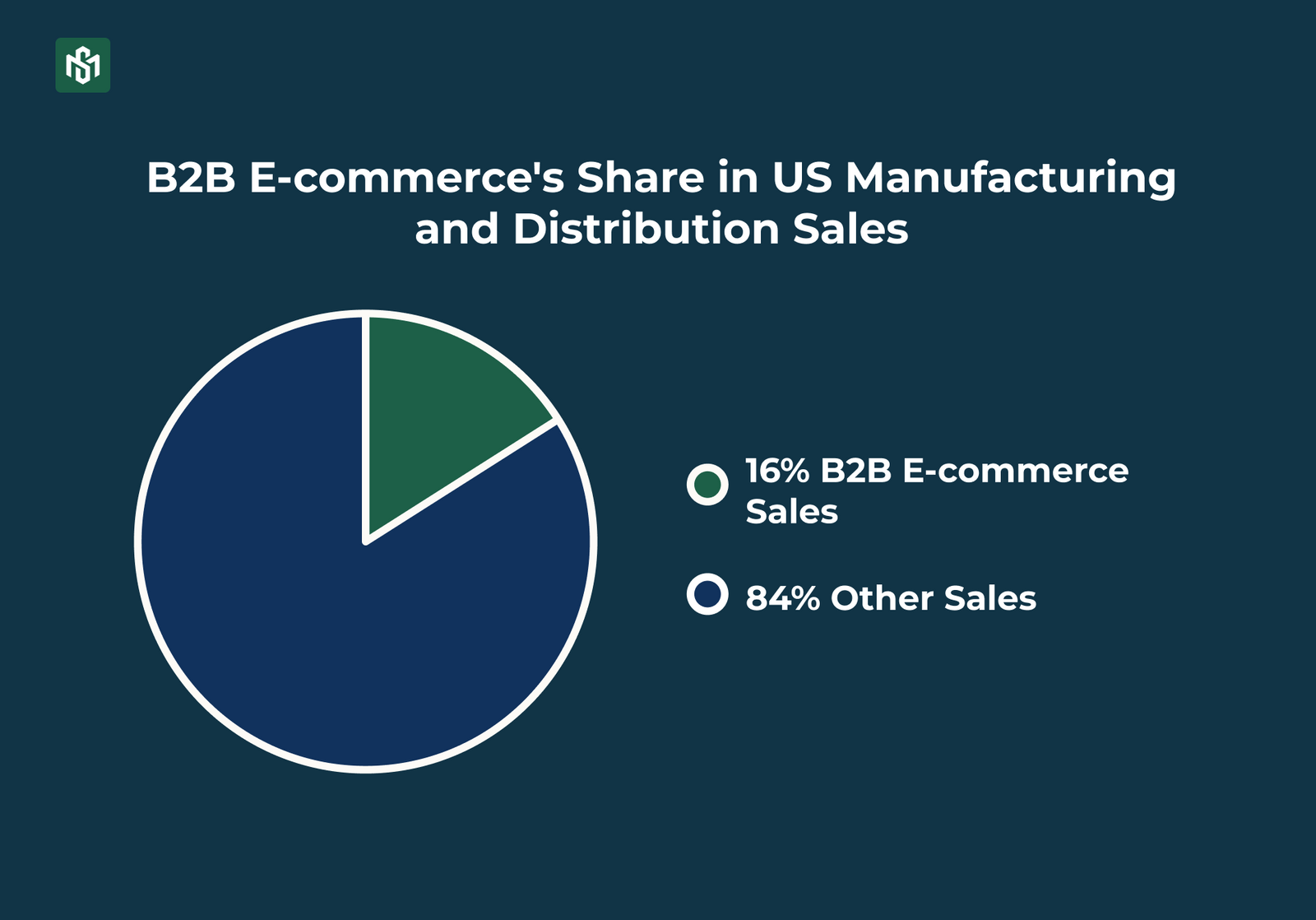
Sure enough, when you look at manufacturing specifically, the numbers are even more striking: B2B e-commerce already accounts for about 16% of all US manufacturing and distribution sales, with sales of around $2.64 trillion USD.
So why is it growing so fast?
Three reasons:
- Buyers now expect a digital experience. The people making procurement decisions today grew up buying things online. They don’t want to call a sales rep to get pricing. They want a self-service portal.
- Sellers are cutting costs. Automating order entry, pricing, and invoicing reduces manual work and frees sales teams for high-value accounts.
- The technology finally caught up. Modern platforms like Shopify B2B, Salesforce, and custom portals can now handle the complexity that used to require months of custom development.
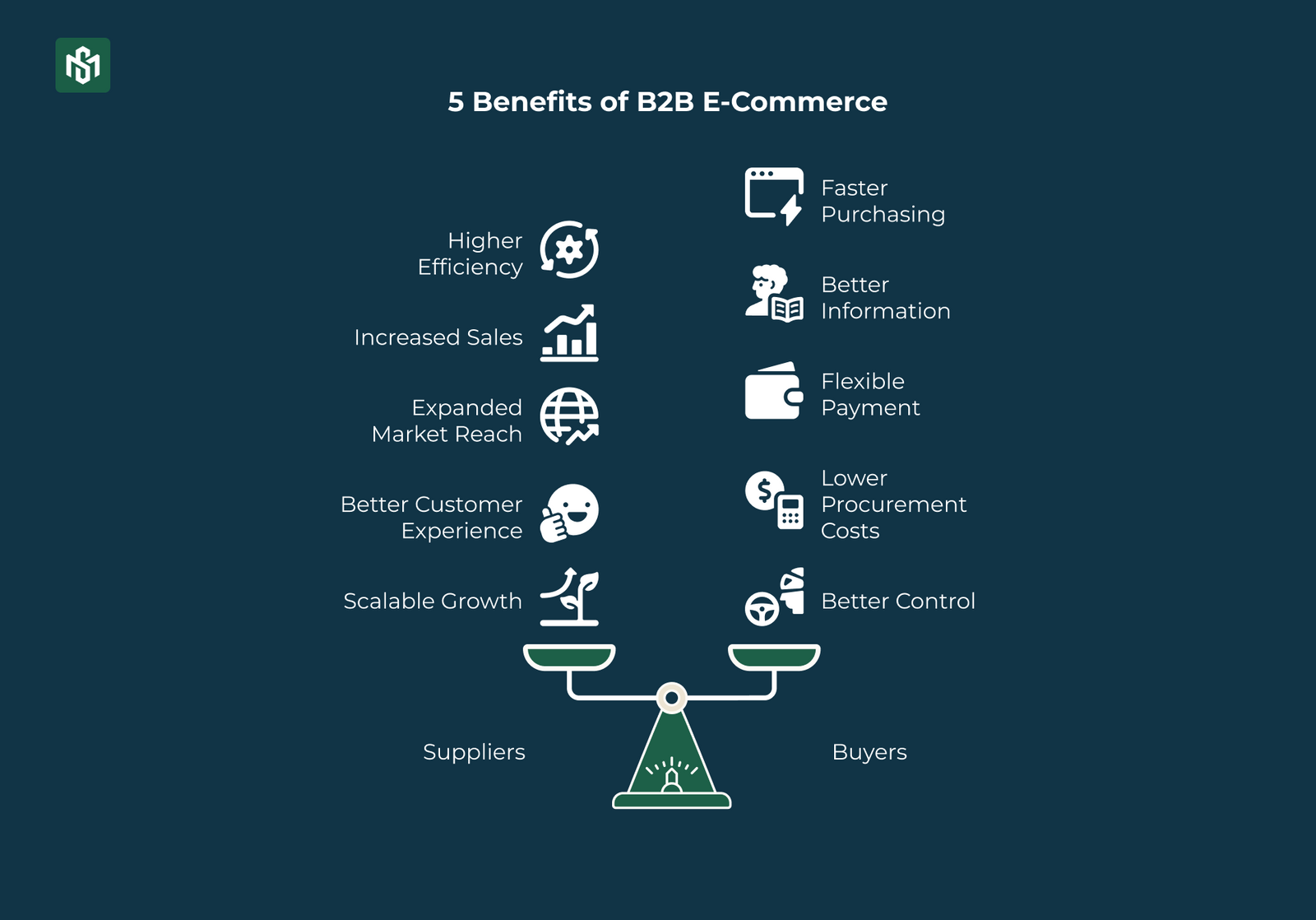
5 Benefits of B2B E-Commerce for Suppliers
If you’re a supplier (manufacturer, wholesaler, or distributor), going digital unlocks five concrete advantages.
1. Higher Efficiency, Lower Costs
Online ordering automates order entry, pricing, invoicing, and inventory updates.
That means fewer errors, less manual work, and sales teams that spend time on key accounts, not retyping orders.
2. Increased Sales and Larger Order Values
B2B sites make it easy for customers to see your full catalog, discover related products, and reorder — all of which increases average order value.
And you’re selling 24/7 across time zones, even when your reps are asleep.
3. Expanded Market Reach
A digital channel lets you reach new customer segments and international markets without building a physical presence in each country.
Marketplaces and partner portals put you in front of buyers who would never meet a field salesperson.
4. Better Customer Experience
Self-service portals with real-time pricing, stock levels, and order tracking reduce frustration and support tickets.
Personalized catalogs, contract pricing, and one-click reordering make it easy for buyers to stick with you which improves retention dramatically.
5. Scalable Growth and Data-Driven Decisions
Once the platform is live, adding new products, customers, or regions doesn’t require hiring a lot more staff.
And detailed analytics on what customers search for, view, and buy help you optimize pricing, assortment, and marketing over time.
5 Benefits of B2B E-Commerce for Buyers
The benefits aren’t one-sided. Buyers get a better deal too.
1. Faster, Simpler Purchasing
Buyers can search, compare, configure, and order products online no waiting for quotes by phone or email.
Saved carts, order templates, and one-click reordering make repeated purchases dramatically faster. For recurring B2B orders, this is HUGE.
2. Better Information and Transparency
Online catalogs provide detailed specs, documentation, and pricing. Buying teams make more informed decisions.
Real-time stock visibility and delivery tracking reduce uncertainty on critical orders.
3. Flexible Payment and Terms
B2B platforms support credit terms, purchase orders, installment plans, and other payment arrangements that match corporate cash-flow needs.
Procurement and finance teams can actually align purchases with budgets and approval rules.
4. Lower Total Procurement Costs
Self-service ordering and automated workflows reduce the time buyers spend on phone calls, paperwork, and manual approvals.
Easier price comparison across more suppliers can also lower unit prices.
5. Better Control and Compliance
Role-based access, approval chains, and spend limits help companies enforce internal policies and prevent maverick buying.
Centralized order history and invoices make audits and supplier performance tracking easy.
Why Are B2B Companies Still Slow to Go Digital?
If the benefits are this obvious, why hasn’t every B2B company gone digital already?
Four reasons and they’re all real.
1. Relationship-Driven Culture
Traditional B2B sales are built on personal relationships, handshake deals, and trust built over decades. Many senior leaders fear that moving online will weaken that “human touch.
Sales teams who grew up with offline selling often resist digital tools, not because they’re wrong, but because the methods that got them here have genuinely worked.
2. Complex Pricing and Processes
B2B deals usually involve custom prices, contracts, credit terms, approval workflows, and complex shipping.
That’s much harder to model online than a simple “add to cart, fixed price” flow. Any pricing mistake on a $500K order can damage a relationship that took years to build.
3. Legacy Systems and Limited Resources
Many manufacturers and distributors run on old ERP systems that are hard to integrate with modern e-commerce platforms.
Smaller firms often lack the IT skills, budget, and time. So they prioritize today’s operations over a digital project that might take two years to pay back.
4. Fear of Channel Conflict
Manufacturers worry that selling online will upset their distributors. Distributors fear competing with Amazon Business and Alibaba.
Sales reps see e-commerce as a direct threat to their commissions.
Needless to say, that internal resistance slows things down a lot.
5 Industries That Benefit Most From B2B E-Commerce
B2B e-commerce isn’t evenly distributed across industries. Some sectors are accelerating fast and others are just getting started.
1. Manufacturing and Industrial
In the US, B2B e-commerce accounts for about 16% of all manufacturing and distribution sales** roughly $2.64 trillion USD in 2024.
Manufacturers use B2B platforms to centralize ordering, share product specs, and offer self-service reordering for dealers and OEM customers.
2. Wholesale and Distribution
Wholesalers benefit from online catalogs, contract pricing, and automated ordering for thousands of retail and business accounts.
B2B e-commerce helps them compete with Amazon Business and Alibaba by improving efficiency and customer self-service.
3. Construction Materials and Building Supplies
Construction and building-materials suppliers use B2B portals to manage large, project-based orders with customer-specific price lists and credit limits.
Here’s where the opportunity gets interesting: only about 20% of building-materials and construction firms have adopted e-commerce solutions. Digital adopters have a big competitive edge right now.
4. Healthcare Products and Medical Supplies
Healthcare distributors use B2B e-commerce to simplify procurement for hospitals, clinics, pharmacies, and government buyers.
Digital portals that centralize product data, certifications, and ordering significantly improve compliance in a heavily regulated industry.
5. Food, Beverage, and Hospitality Supply
Food and beverage suppliers sell in recurring, time-sensitive cycles to restaurants, hotels, and retailers.
Online reordering, contract pricing, and standing orders are insanely valuable here — especially platforms that support subscriptions and flexible wholesale terms.
6. Consumer Goods, Fashion, and Beauty
Brands in fashion, accessories, beauty, and home décor use B2B e-commerce to run wholesale channels for boutiques, chains, and online retailers.
Digital line sheets, pre-orders, and B2B portals that run alongside B2C stores on the same platform are becoming standard in this space.

Real-World B2B E-Commerce Examples
B2B e-commerce isn’t theoretical. Here are the actual companies running it at scale.
And thousands of mid-market manufacturers and wholesalers running direct B2B portals for their dealers and business customers, often integrated with NetSuite or SAP, supporting complex price lists and quote-to-order workflows.
- Alibaba.com: The global B2B marketplace where manufacturers sell in bulk to importers, wholesalers, and brands worldwide. The original B2B e-commerce giant.
- Amazon Business: Amazon’s B2B version with business accounts, quantity discounts, and invoicing for companies buying everything from office supplies to industrial tools.
- Grainger: A major industrial supplier whose B2B site lets companies order tools, safety equipment, and spare parts with bulk ordering, contract pricing, and account management. A textbook example of a traditional distributor that nailed digital.
- McMaster-Carr and Fastenal: Online catalogs for engineers and maintenance teams to buy hardware and components for factories and facilities. Order by part number, get next-day delivery.
- Salesforce and Adobe: SaaS companies selling software subscriptions directly to businesses via self-service portals. This is B2B e-commerce too just for digital products.
The Bottom Line
B2B e-commerce is not the future. It’s already happening at $24 trillion and growing.
Businesses that understand the model, implement the right platform, and get their buyers online first will compound that advantage for years.
Whether you’re a manufacturer trying to modernize your dealer portal, a wholesaler competing with Amazon Business, or a brand building a wholesale channel alongside your DTC store the opportunity is real.
And it’s bigger than most people realize.