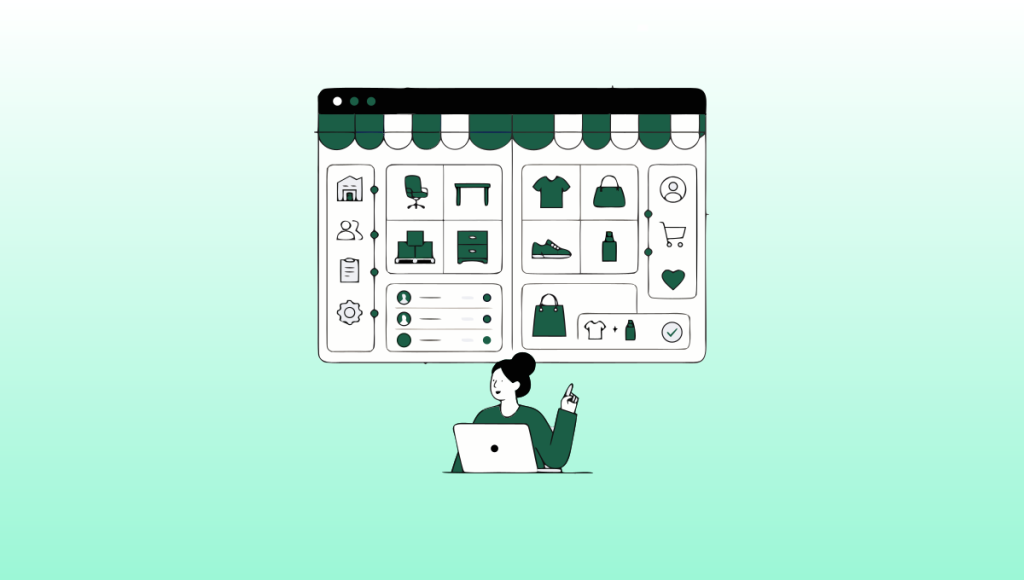
Most brands running both wholesale and direct-to-consumer are operating two completely separate systems.
A DTC Shopify store or wholesale portal still running on spreadsheets, EDI, and manual PDF orders.
The result is predictable: duplicated product data, manual inventory reconciliation, inconsistent pricing, and fragmented reporting. Your ops team spends hours every week syncing data between systems that should have been one system from the start.
In 2026, the leading platforms Shopify Plus are solving this with a genuine single-admin approach: one backend, one catalog, one inventory layer, with radically different buying experiences for B2B and DTC customers on the front end.
In this guide, I’ll break down EXACTLY the features that make hybrid B2B + DTC ecommerce work and what to look for when evaluating platforms for 2026.
Let’s dive right in.
Why B2B + DTC on one admin
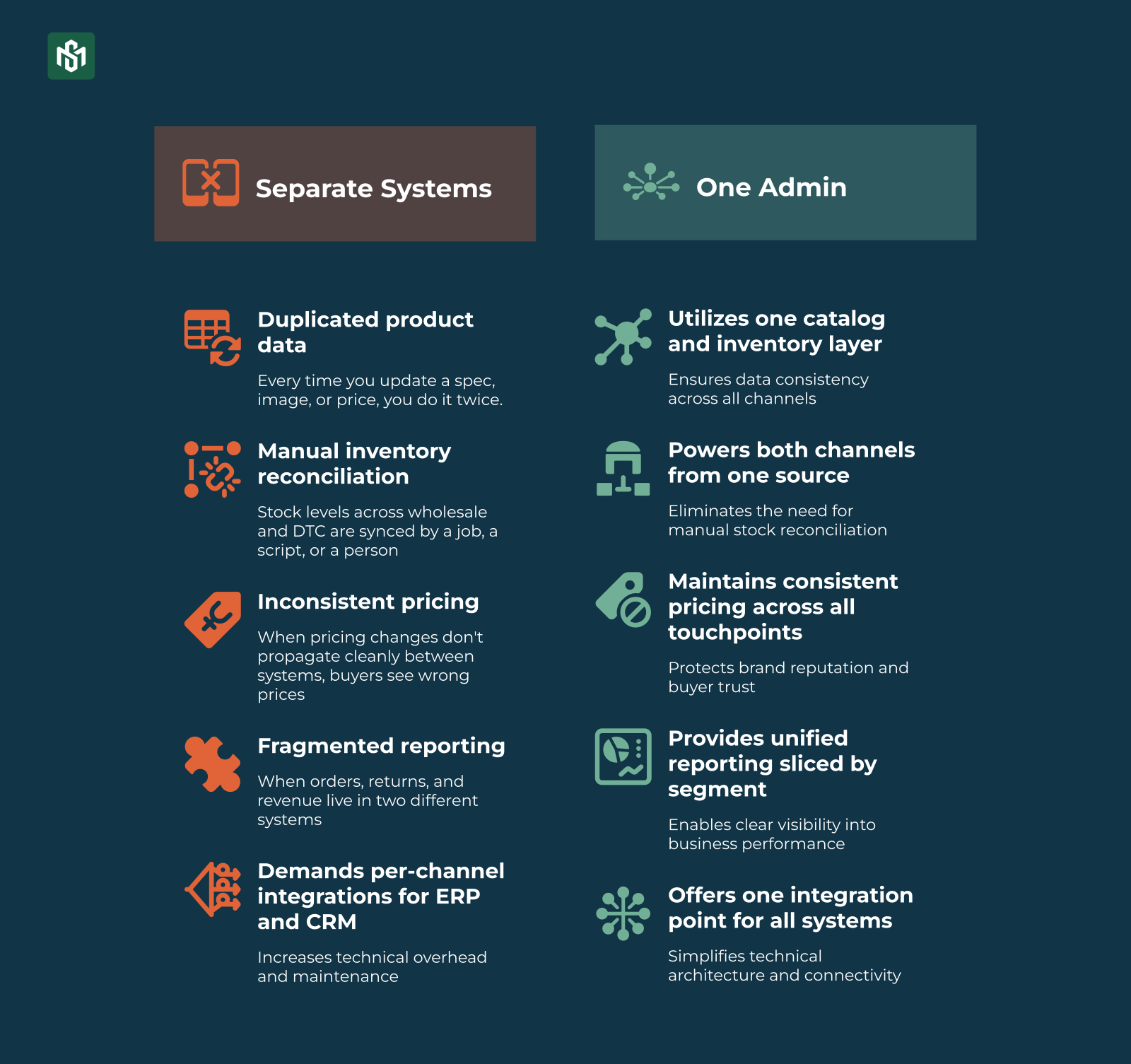
Running separate B2B and DTC systems creates four compounding problems:
- Duplicated product data. Every time you update a spec, image, or price, you do it twice. And one system is usually behind.
- Manual inventory reconciliation. Stock levels across wholesale and DTC are synced by a job, a script, or a person, all of which fail at inconvenient moments.
- Inconsistent pricing. When pricing changes don’t propagate cleanly between systems, buyers see wrong prices. That damages trust faster than almost anything else.
- Fragmented reporting. When orders, returns, and revenue live in two different systems, understanding your actual business performance requires manual stitching.
The single-admin approach solves all four at once:
- One catalog and inventory layer powering both channels
- Separate, tailored buying experiences driven by account type and permissions
- One integration point for ERP, WMS, PIM, and CRM instead of per-channel integrations
- Unified reporting that slices by channel, region, account, and segment
Personalized Buying Experiences
The core tension in hybrid commerce is this: your wholesale buyer and your DTC consumer are using the same platform but they should never have the same experience.
Solving this without duplicating your entire catalog is what modern personalization features are designed for.
Customer-Specific Catalogs
Select product availability per buyer, company, segment, or location without duplicating products.
On Shopify B2B, catalogs bundle product publishing, price lists, and optional rules to produce buyer-specific assortments. A wholesale buyer for a European distributor sees their contracted SKUs at their contracted prices. A DTC consumer sees the full retail catalog at retail pricing.
Same backend. Completely different storefront.
Volume Pricing & Tiered Pricing
Quantity-based price breaks that incentivize larger B2B orders configurable per product and per catalog or price list.
Themes can display these breaks directly on product pages and in the cart, so buyers can see exactly what they’ll pay at each quantity tier before they commit to an order size.
Quantity Rules
Minimums, maximums, case packs, and step increments per product and per customer.
For example: wholesale buyers must order in cases of 12 only. DTC consumers can order a single unit. The same product, the same platform, different rules enforced automatically based on who’s logged in.
This ensures wholesale orders follow packaging and profitability rules without any manual checking.
Company Profiles
First-class objects representing a business account including locations, payment terms, tax exemptions, and buyer permissions.
Company profiles are what drive which catalogs and prices a buyer sees. When a new B2B account is created, you assign their company profile, and the platform handles the rest: correct pricing, correct products, correct payment terms, every session
Self-Serve Purchasing
67% of B2B buyers prefer a rep-free buying experience. Your platform needs to support that completely.
Modern hybrid platforms solve this with a dedicated buyer portal which is a customizable environment where business customers handle their entire purchasing workflow without contacting your team.
The Buyer Portal
A single destination where B2B customers can:
- Place new orders against their contract pricing
- Track shipment status in real time
- View and pay outstanding invoices
- Reorder from past purchases with one click
- Manage their account information and contacts
Shopify’s B2B portal exposes company-specific pricing, order history, and account management in one unified experience, not a separate system, but a role-based view of the same platform.
Fast Bulk Ordering
CSV order uploads for buyers placing large, multi-SKU orders. Quick-order entry to add items by SKU without browsing. One-click reordering from saved order templates.
These features are insanely valuable for procurement teams who know exactly what they need and just want to place the order fast.
Real-Time Account Visibility
Always-up-to-date credit limits, payment terms, order status, and outstanding invoices to be visible directly in the portal.
This requires company profiles and ERP/finance integrations to keep terms and balances accurate. But when it works, it eliminates the single most common reason B2B buyers call a sales rep.
Streamlined Operations and Sales Workflows
Running B2B and DTC from one admin only delivers value if internal operations are automated and your sales reps can actually work efficiently inside the platform.
Workflow Automation
Auto-tag orders by channel, region, or account tier. Send invoices automatically on fulfillment. Notify sales reps when their accounts place orders. Route orders to specific warehouses based on rules.
Tools like Shopify Flow make this configurable without custom code for replacing the manual spreadsheets and ad-hoc processes that accumulate when teams use separate B2B and DTC systems.
Sales Rep Permissions and Tools
Role-based access so reps see only their assigned accounts with full visibility into orders, invoices, and account details.
Reps can build carts, place orders, or generate quotes on behalf of buyers directly from the admin. No back-and-forth emails. No manual order entry.
Company Account Request and Onboarding
A request form on the storefront where prospective buyers apply for wholesale access.
An internal review workflow that helps buyers automatically creates the company profile, assigns the correct catalog and payment terms, and invites the buyer to the portal.
No manual setup steps. No risk of assigning the wrong price list. The onboarding just works.
Tech Stack Integration and Headless Options
For mid-market and enterprise brands, B2B ecommerce must integrate with existing ERP, CRM, and back-office systems
ERP and CRM Integrations
Pre-built connectors or robust APIs for systems like NetSuite, Microsoft Dynamics 365, Acumatica, SAP, Salesforce, and HubSpot.
Real-time or scheduled sync for orders, inventory, pricing, and customer data. No manual reconciliation. No data mismatches on high-value orders.
The integration layer is often what separates a platform that operations teams trust from one they work around.
Headless Storefront Support
GraphQL and REST APIs with SDKs for React, Vue, mobile apps, and other custom front-ends that allow a completely custom buying experience while the commerce platform remains the system of record.
This matters when your B2B UX needs to diverge significantly from standard themes, or when multiple brands and regional storefronts need to share the same backend.
Third-Party Authentication (SSO)
Support for SAML and OAuth so enterprise buyers can log into the B2B portal using their existing corporate identities.
In practice: a procurement manager at a large B2B account logs into your portal the same way they log into their own company’s internal tools. No new password to manage.
This also meaningfully improves security posture for both sides.
AI and Discovery
Large, technical B2B catalogs have always been hard to navigate and AI is changing quickly
Natural-Language Search
Search that accepts everyday phrasing instead of requiring exact SKUs or part numbers.
This removes a critical friction point for new buyers and infrequent purchasers who know what they need but don’t know your taxonomy.
AI Catalog Exposure and Assistants
Making your catalog indexable by AI shopping tools and conversational assistants so buyers can research, filter, and build carts through natural conversation layered on top of your product data.
As 94% of B2B buyers now use AI at some point in their purchasing process, having a well-structured, AI-readable catalog isn’t a future-state consideration. It’s a 2026 baseline.
That said, these AI features are accelerators layered onto core B2B capabilities, not replacements for them. A conversational search experience built on a poorly structured catalog still fails.
Shared Architecture
Individual features matter. But the architecture that ties them together is what determines whether one admin is real or just a marketing claim.
Single Admin with Multi-Storefront Support
Manage multiple storefronts or experiences like consumer site, B2B portal, regional sites from one backend.
Shopify supports “blended” stores where B2B and DTC buyers use the same store and admin, segmented by company accounts and catalogs.
The outcome: your merchandising, pricing, and inventory teams work in one place.
Not three.
Shared Catalog and Inventory
One product catalog. One real-time inventory ledger. Both powering all channels simultaneously.
This eliminates the process of transfering inventory data between systems that cause overselling, underselling, and the kind of order errors that generate customer service tickets at night
Unified Order and Return Management
All orders from B2B, DTC, marketplace, retail and all returns flow through one order management layer with consistent workflows: picking, packing, shipping, RMA, restocking, credit notes.
One process for your warehouse team to learn. One place for your ops team to manage exceptions. One view of returns performance across channels.
Cross-Channel Analytics and Reporting
Reporting that slices revenue, margin, and behavior by channel, region, segment, and account.
This is essential for understanding how B2B and DTC influence each other and for making inventory, pricing, and channel strategy decisions based on a complete picture of your business.
B2B Fundamentals
These features are often the difference between a B2B MVP that marketing loves and a B2B platform that finance, tax, and IT teams can fully support.
Approval Workflows on the Buyer Side
Support for internal approval flows at the customer’s organization where junior buyers create carts or requisitions, and managers approve before orders are placed.
This reflects how actual procurement works at mid-market and enterprise accounts. A platform that skips this forces buyers to work outside the system to get internal approvals done.
Quotes and Purchase Order Handling
Ability for buyers or reps to initiate RFQs (requests for quota), generate and negotiate quotes, and convert them to orders inside the platform.
First-class support for PO numbers at checkout, on order confirmations, and on invoices so ecommerce orders tie cleanly to the buyer’s internal purchasing system.
Without PO number support, many B2B accounts simply can’t use your portal. Their finance team requires it.
Returns, RMA, and Credit Management
Standardized RMA flows, restocking rules, and credit memo handling that work for both B2B and DTC.
This means finance and operations don’t maintain separate, manual return processes for wholesale customers, the same workflow handles both, with the right rules applied per channel.
Tax, Compliance, and Admin Permissions
Company-level tax configurations including VAT/GST exemptions and the correct invoice formats for different jurisdictions.
Role-based admin permissions and audit logs for sensitive operations like pricing changes, payment terms edits, order adjustments, approval overrides — to satisfy internal controls and external audits.
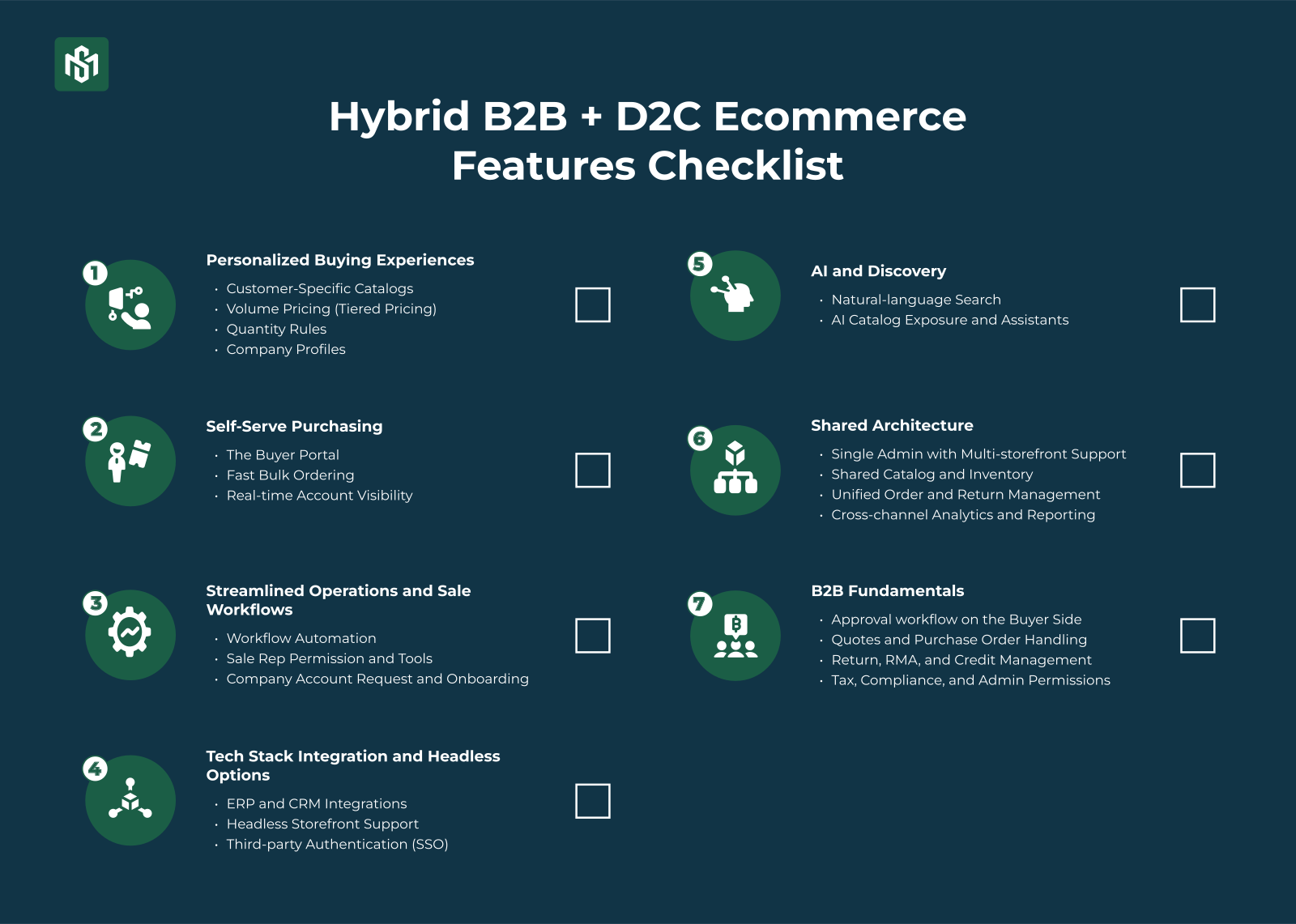
Here’s everything in one place:
The Bottom Line
Running separate B2B and DTC systems made sense when the technology couldn’t handle both in one place.
That’s no longer the case.
The platforms built for 2026 like Shopify Plus, BigCommerce, and others are designed from the ground up to run wholesale and direct-to-consumer from a single admin, with one catalog, one inventory, and one integration layer.
The brands that consolidate onto a single-admin architecture in 2026 will operate faster, report more accurately, and serve B2B buyers better than competitors still managing two systems.