
The global B2B ecommerce market is projected to hit $36 trillion USD in 2026.
That’s not a rounding error. That’s roughly 29 times the size of total U.S. retail ecommerce.
And it’s still growing at a double-digit annual rate.
In this post, I’ve pulled together the most important B2B ecommerce statistics for 2026 covering market size, buyer behavior, AI adoption, and platform trends.
Whether you’re building a B2B channel, pitching an investment case, or just trying to understand where the market is headed, these numbers tell the story.
Let’s dive right in.
B2B Ecommerce Is Already Several Times Larger Than B2C
Most people dramatically underestimate how big B2B ecommerce is.
Here’s the comparison that puts it in perspective:
- The U.S. International Trade Administration projects the global B2B ecommerce market will grow at a 14.5% CAGR and reach approximately $36 trillion USD by 2026.
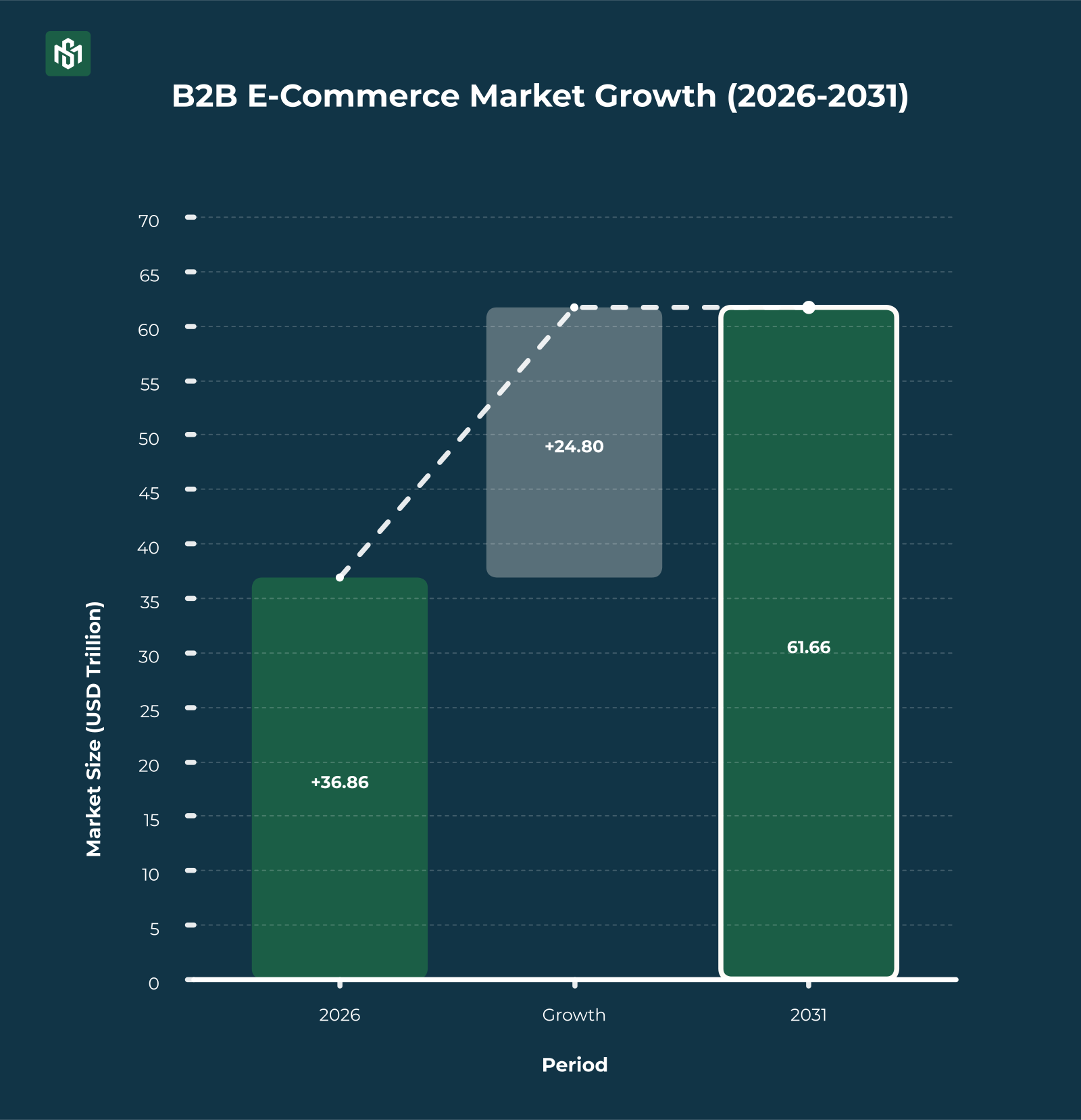
- Mordor Intelligenceforecasts it even higher: $36.86 trillion in 2026, growing to $61.66 trillion by 2031 at a 10.84% CAGR.
- Total U.S. retail ecommerce (mostly B2C) reached $1.234 trillion in 2025 with ecommerce accounting for 23.1% of addressable retail sales.
Sure enough, B2B ecommerce isn’t just bigger than B2C, it’s in a completely different weight class.
And in the US specifically:
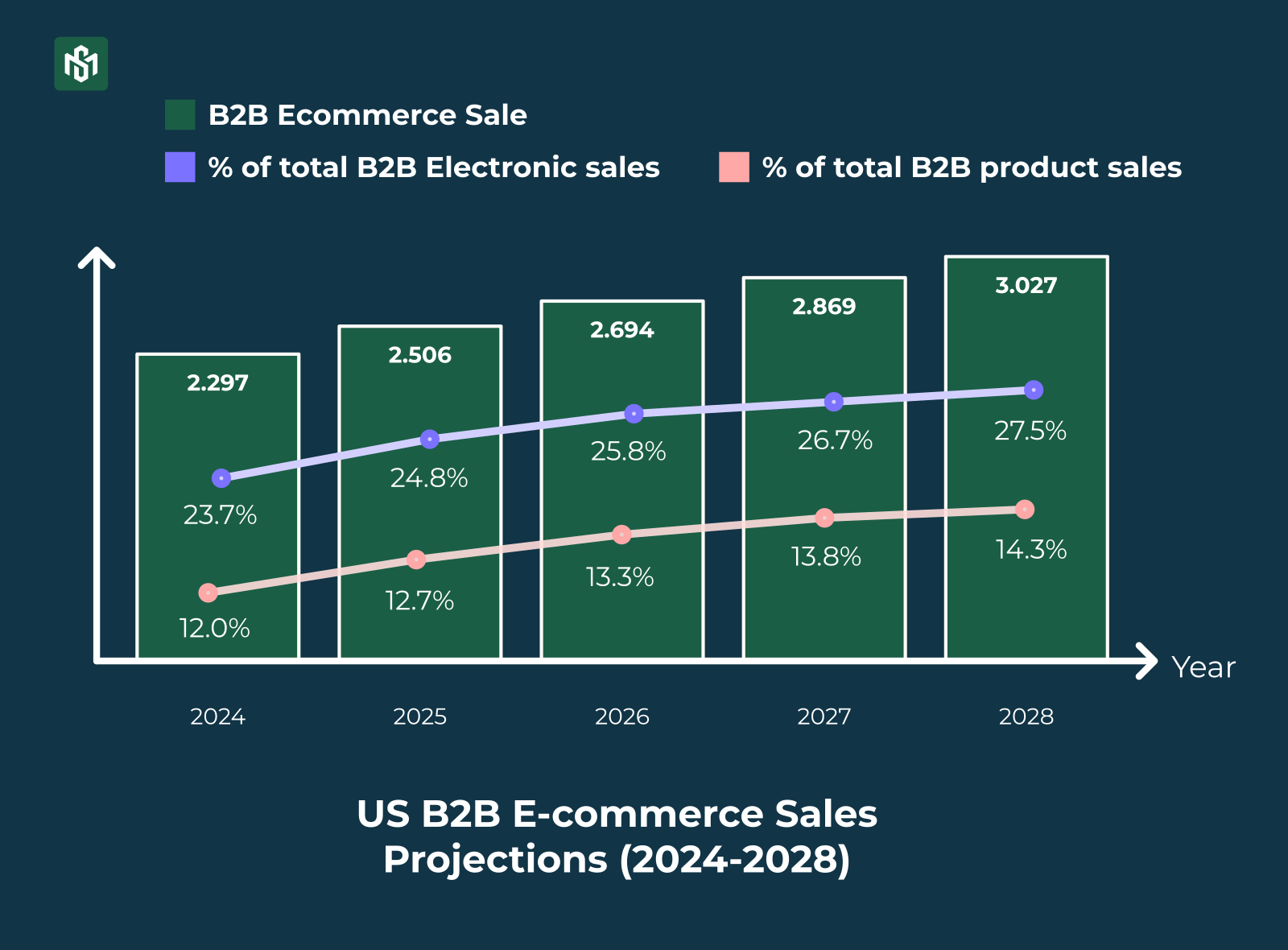
- US B2B ecommerce site sales reached $2.297 trillion in 2024, up 10.5% year-over-year. They project that $3 trillion milestone by 2028.
- Forrester projects US B2B ecommerce will surpass $3 trillion by 2027 at a 10.7% five-year CAGR.
70% of B2B Buyers Are Ready to Spend Up to $500,000 in a Single Online Transaction
This is the statistic that stops most people in their tracks.
In B2C, a $500 order is a great day. In B2B ecommerce, buyers are increasingly comfortable placing six- and seven-figure orders through a self-service digital channel.
The data from McKinsey’s Global B2B Pulse makes this crystal clear:
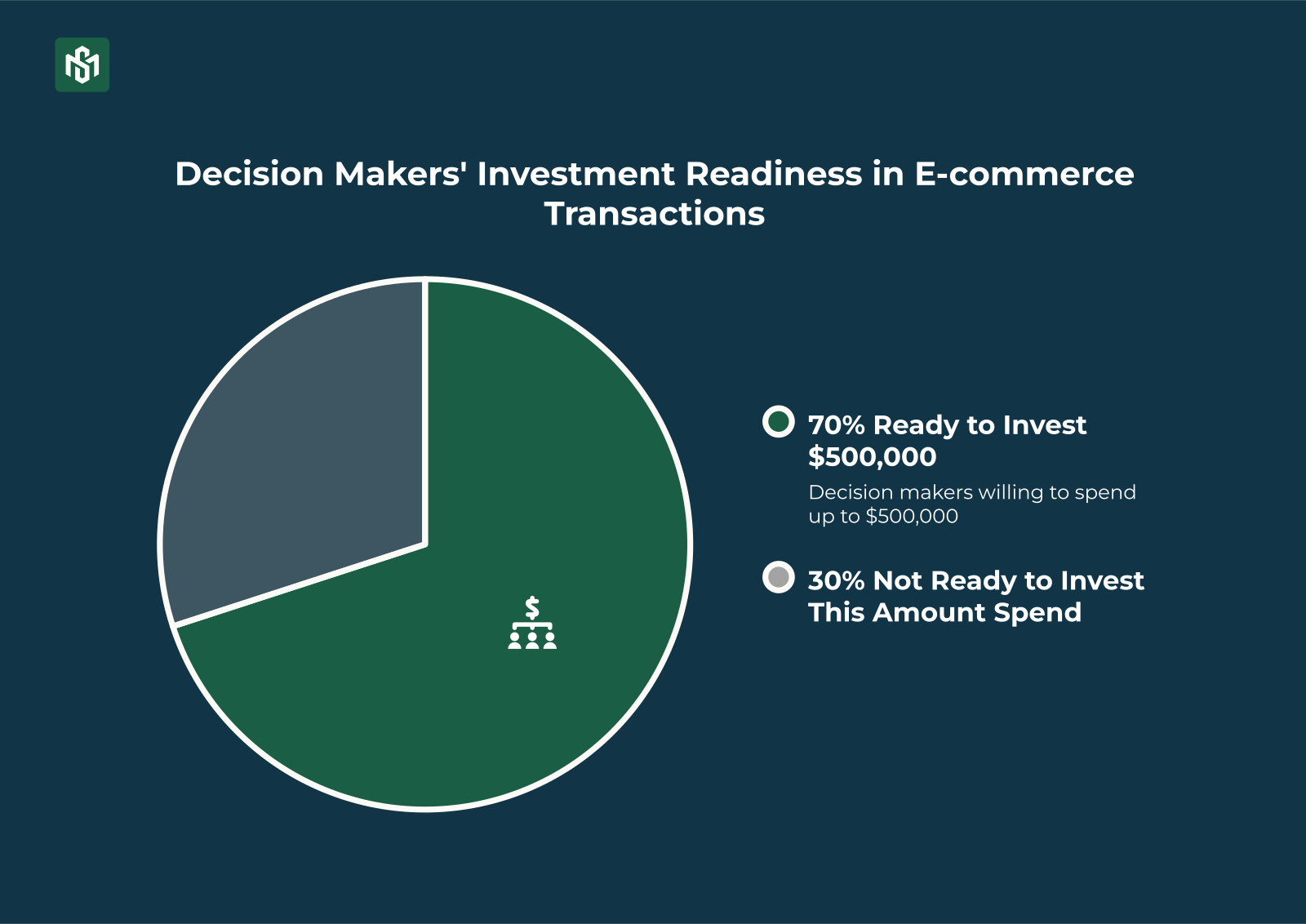
- About 70% of B2B decision-makers are prepared to spend up to $500,000 USD in a single ecommerce transaction.
- The number of buyers willing to spend up to $10 million USD in a single ecommerce transaction increased by 83% compared with two years earlier.
- 39% of B2B buyers are willing to spend more than $500,000 per order through self-service or remote online channels up from just 28% two years prior.
61% of B2B Buyers Now Prefer to Buy Without a Sales Rep
This one reshapes how you think about the B2B sales model entirely.
For decades, B2B sales meant relationship management, account executives, and phone calls. That model is being disrupted from the demand side.
The numbers:
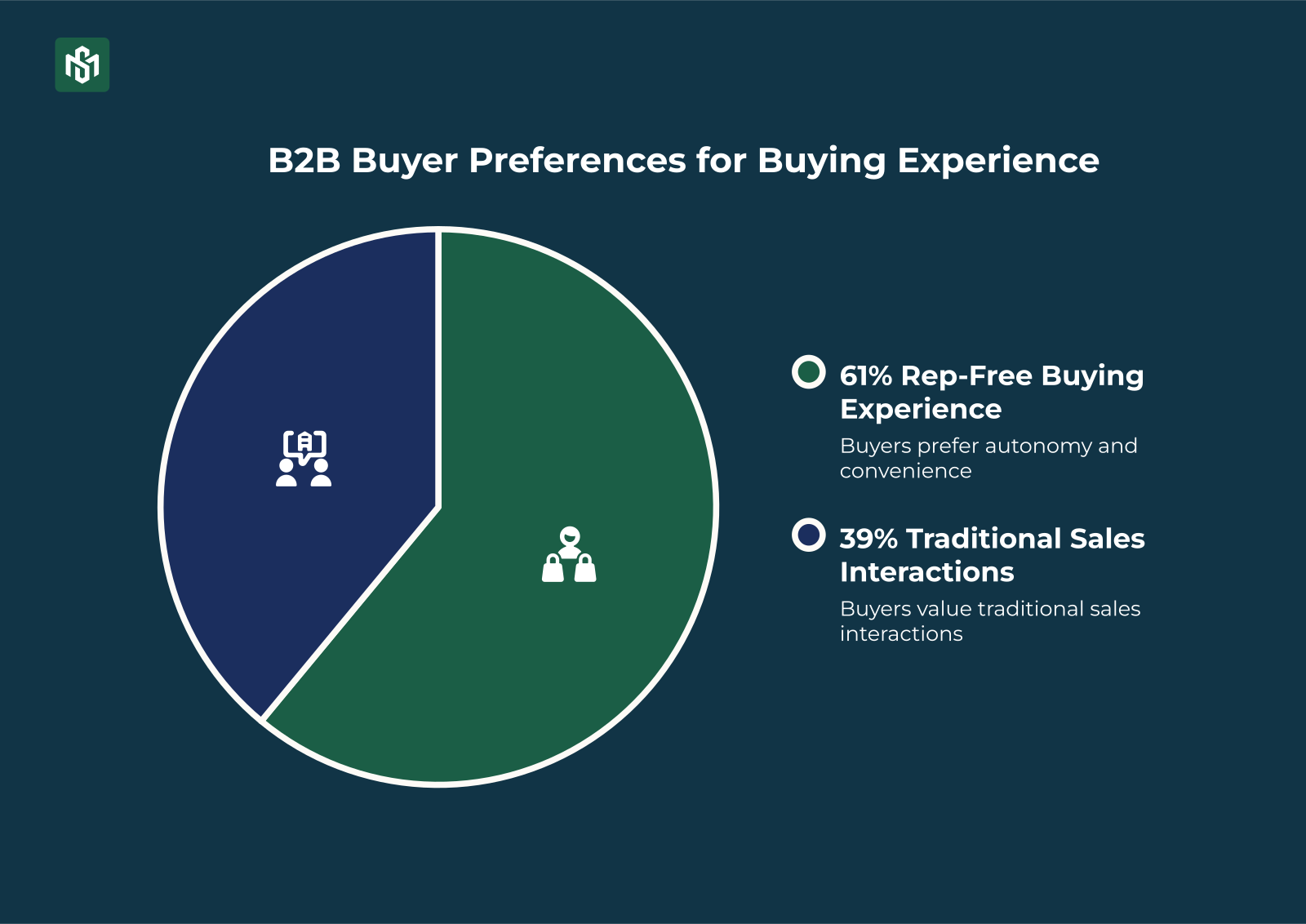
- 61% of B2B buyersprefer an overall rep-free buying experience
- Gartner forecasts that by 2025, 80% of B2B sales interactions between suppliers and buyers will occur in digital channels.
- 73% of B2B buyers prefer to buy online, 71% of B2B buyers are Millennials or Gen Z digital natives who expect a self-service experience as a baseline, not a nice-to-have.
- B2B buyers now use around 10 channels on average in their buying journey up from just 5 channels in 2016
That doubling of channels in less than a decade reflects a fundamental shift in how B2B purchasing decisions are made. Buyers research across digital touchpoints, evaluate online, and increasingly expect to transact online too.
94% of B2B Buyers Now Use AI in Their Purchasing Process
AI adoption in B2B ecommerce isn’t a future trend. It’s already the norm — on both sides of the transaction.
On the buyer side
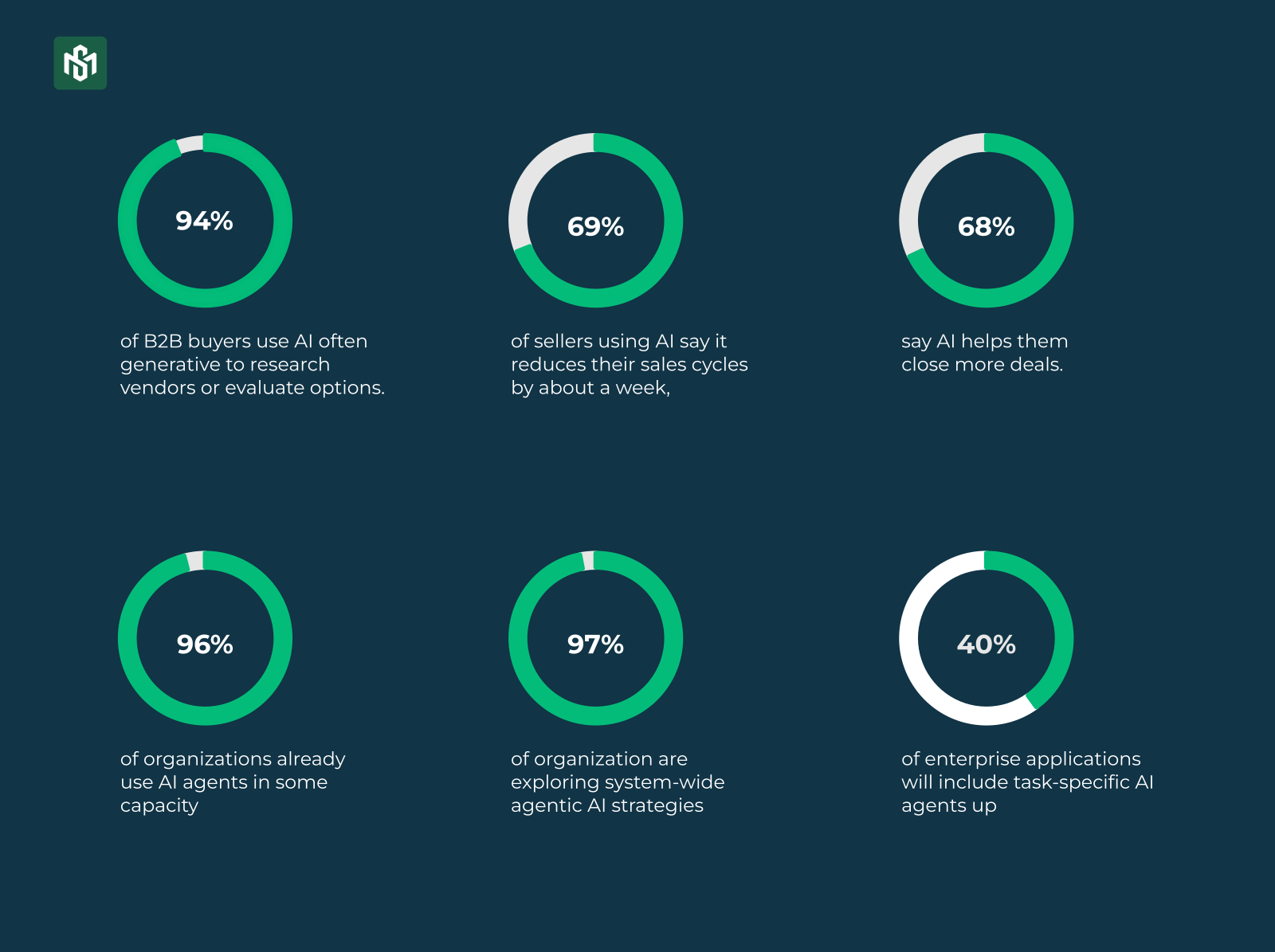
- 94% of B2B buyers now use AI often generative AI at some point in the buying process to research vendors or evaluate options.
On the seller side
- 69% of sellers using AI say it reduces their sales cycles by about a week, 68% say AI helps them close more deals.
- AI-using sellers are about twice as likely to exceed their sales targets
On the organizational side
- 96% of organizations already use AI agents in some capacity, and 97% are exploring system-wide agentic AI strategies
- Gartner projects that by end of 2026, 40% of enterprise applications will include task-specific AI agents up from fewer than 5% a year earlier.
And the ROI is arriving faster than most expected:
- 19% of B2B revenue teams saw ROI from AI within 3 months, 19% within 3–6 months, 27% within the first year.
That means roughly two-thirds of organizations achieved positive ROI from AI within 12 months.
Agentic AI is also beginning to reshape the operational layer of B2B ecommerce itself, handling low-effort tasks like building order lists, processing reorders, and routing approvals automatically.
75% of B2B Buyers Would Switch Suppliers for a Better Online Experience
The online buying experience is now a retention issue not just a convenience feature
- Roughly 85% of B2B organizations now provide some form of online purchasing whether via an ecommerce storefront, a self-service portal, or embedded ordering experiences
- More than two-thirds of B2B organizations operate an ecommerce site or portal, and adoption continues to rise
But having an online channel isn’t enough.
- A large majority of B2B buyers say suppliers’ online experiences are frustrating.
- 75% of B2B buyers say they would switch suppliers for a better online buying experience.
That last number is HUGE. Three out of four B2B buyers will leave a supplier regardless of the existing relationship, if a competitor offers a better digital experience.
This means the bar for “good enough” in B2B ecommerce is rising. A basic portal with outdated UX, manual pricing, and no self-service account management is no longer competitive.
B2B Now Accounts for 55.2% of the Entire Subscription Economy
One more stat that reframes how large B2B digital commerce really is.
- The B2B segment accounted for 55.2% of total subscription-economy revenue in 2024, with the remainder coming from B2C subscriptions
SaaS platforms, software licenses, managed services, recurring supply contracts, a majority of the entire subscription economy runs on B2B.
This makes sense when you think about it. Enterprise software contracts, annual supply agreements, and recurring service arrangements all function as B2B subscriptions. And the volume dwarfs consumer subscription spending.
The Bottom Line
The data tells a clear story.
B2B ecommerce is a $36 trillion market growing at double digits. Buyers are ready to spend $500K or more through self-service channels. The majority prefer no sales rep involved. AI is already reshaping how both buyers research and sellers close deals. And three out of four buyers will switch suppliers if your online experience isn’t good enough.
The shift is happening now. The businesses building quality B2B digital channels in 2026 will own the customer relationships and the recurring revenue for the decade that follows.