Ecommerce has officially overtaken in-person sales as the most effective revenue-generating channel in B2B.
Not eventually. Not soon. Now.
McKinsey’s B2B Pulse data shows that online channels generate 34% of total B2B revenue and that number is still climbing. Businesses that built their entire commercial model around field sales, trade shows, and PDF catalogs are watching revenue quietly shift to competitors who made the digital move earlier.
2026 isn’t the year to “explore” B2B ecommerce. It’s the year to accelerate it.
Here are the 7 trends reshaping B2B commerce right now and what each one means for your business.
Let’s dive right in.
B2B Ecommerce Is on a Path to $30 Trillion by 2030
The market isn’t growing. It’s compounding.
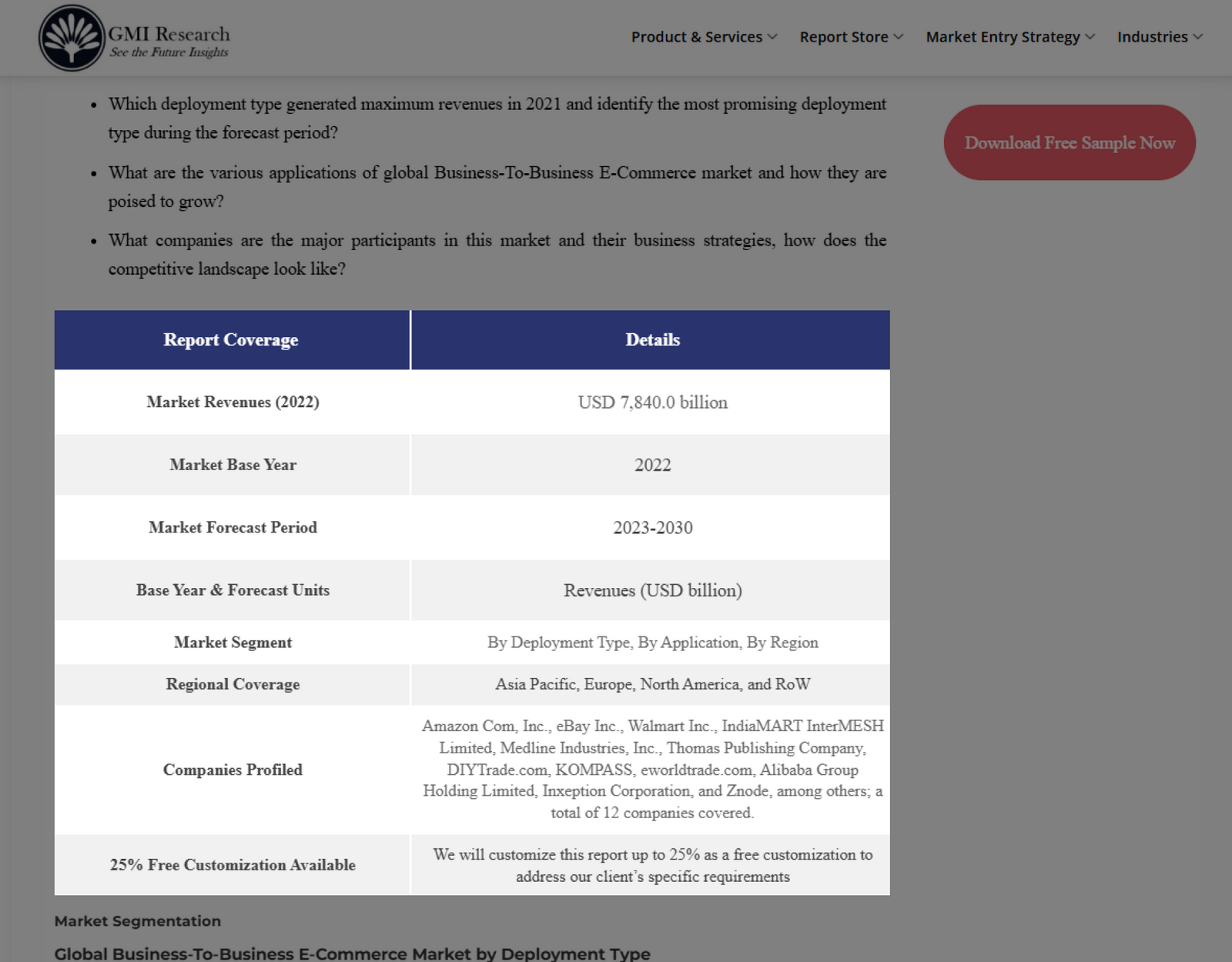
Global B2B ecommerce is projected to grow at roughly 18% CAGR through 2030 rising from approximately $7–9 trillion in 2023 to around $30 trillion by 2030.
To put that in perspective: the entire US retail ecommerce industry hit $1.2 trillion in 2025. B2B is heading toward a figure more than 20 times that size.
And the channel mix is already shifting dramatically. Ecommerce and online channels now account for 34% of total B2B revenue and McKinsey data confirms they’ve overtaken in-person sales as the top-performing revenue channel.
In other words: the companies winning B2B revenue in 2026 are winning it online.
The companies that haven’t built a digital channel aren’t just missing an opportunity. They’re losing ground to competitors who have.
The Digitally Native B2B Buyer Has Taken Over
The person approving your purchase orders today grew up buying things online.
They don’t want to call a sales rep to get a price list. They don’t want to wait three days for a quote via email. And they will not accept friction as “part of the process.”
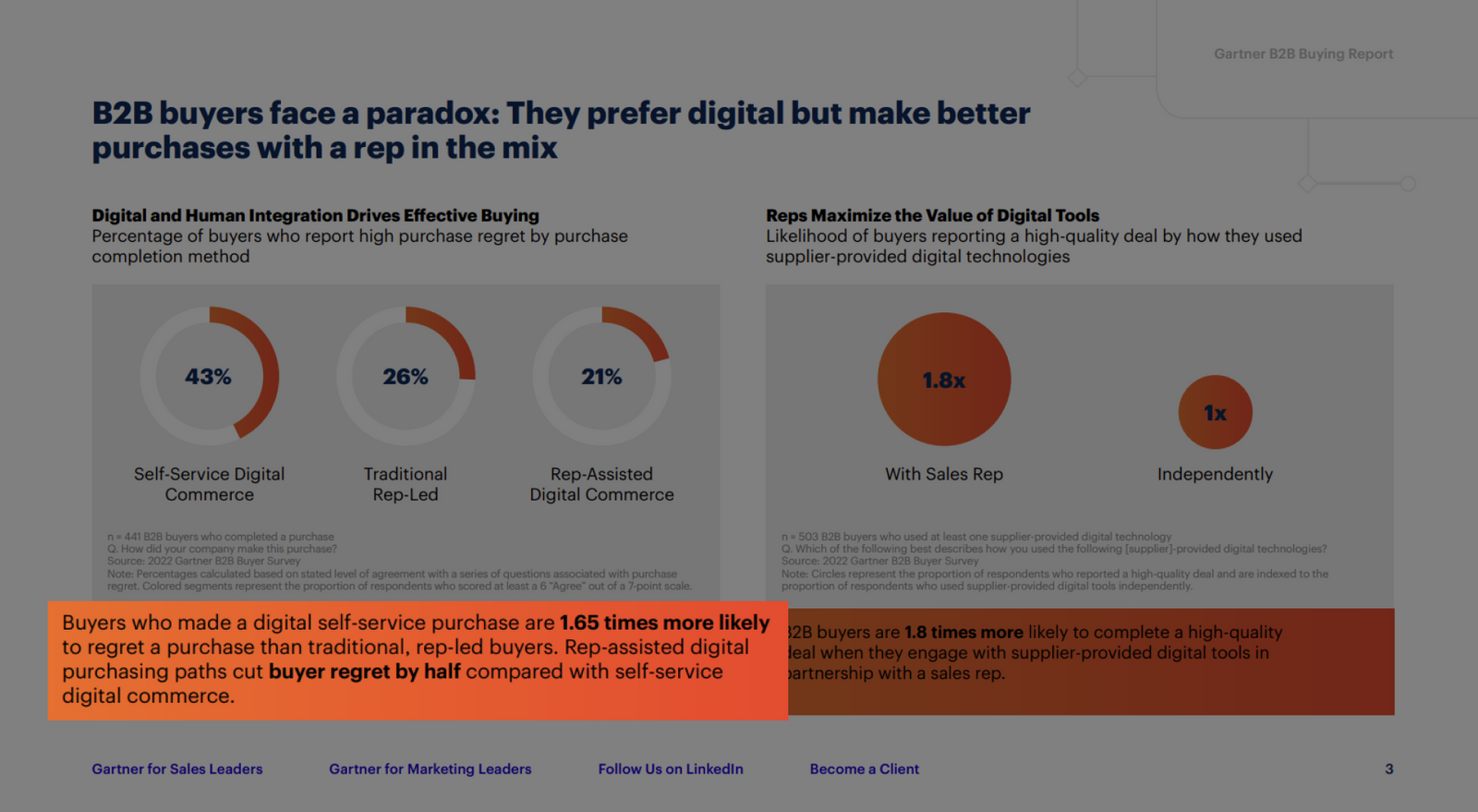
Here’s the stat that reframes everything:
70% of the B2B buyer journey happens before a buyer ever talks to sales
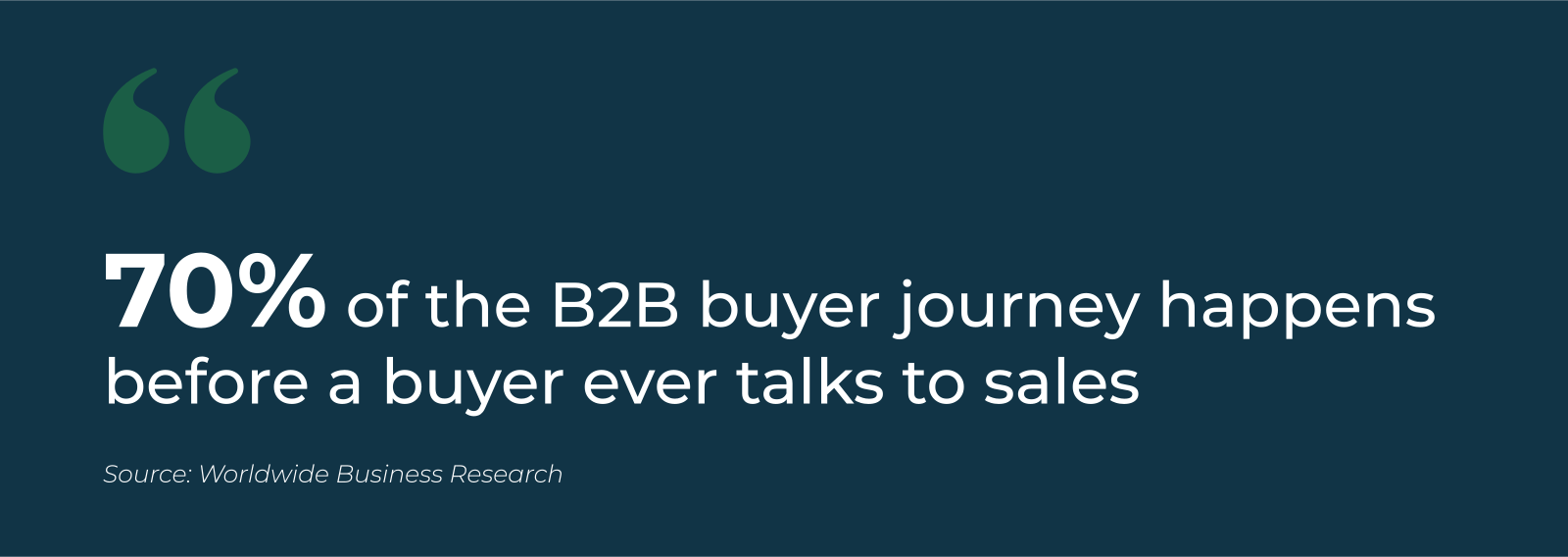
By the time a prospect contacts your sales team, they’ve already done most of their research online, independently, without your involvement. They’ve compared suppliers, evaluated specs, and often pre-decided who they want to buy from.
If your digital presence, your catalog, your content, your pricing transparency isn’t strong enough to win at that stage, you’re losing deals before your sales team even knows they exist.
These buyers expect B2C-grade experiences: rich product content, transparent pricing, instant comparisons, and convenient self-service. They don’t accept friction as a feature.
Self-Serve Is Now the Standard
Three years ago, a self-service B2B portal was a competitive differentiator.
Today, it’s a baseline expectation.
80–85% of B2B companies now offer some form of self-service portal. The companies that don’t are increasingly out of step with buyer expectations — and they’re feeling it in adoption rates and account retention.
The data on self-serve impact is compelling:
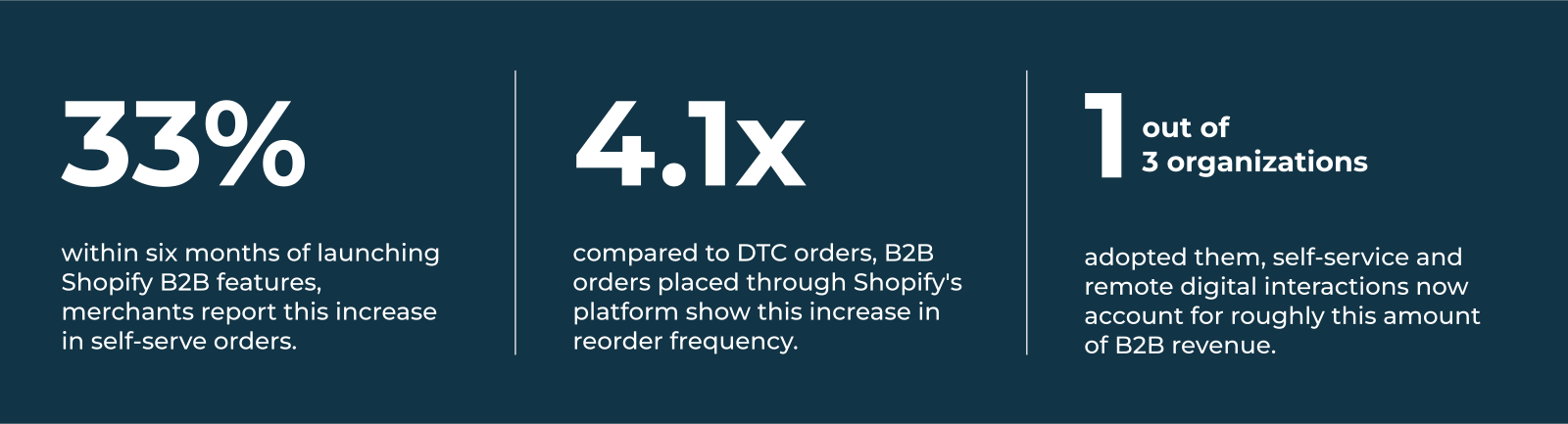
- Merchants using Shopify B2B features report up to a 33% increase in self-serve orders within six months of launch.
- B2B orders placed through Shopify’s platform show up to a 4.1x increase in reorder frequency compared to DTC orders.
- Self-service and remote digital interactions now account for roughly one-third of B2B revenue across organizations that have adopted them
Hyper-Personalization Is Replacing the Generic Catalog
The era of “one catalog for all B2B buyers” is over.
Winning B2B organizations are moving toward dynamic, account-based experiences where each buyer logs in and sees the products, pricing, and terms specific to their contract. No back-and-forth with sales. No “call for pricing.” Everything is already there, personalized and accurate, the moment they log in.
Modern platforms make this possible at scale. Shopify B2B, for example, supports:
- Company profiles where the first-class account objects with locations, payment terms, tax exemptions, and buyer permissions
- Custom catalogs per account where each company sees only the products they’re authorized to buy
- Volume pricing to display tiered price breaks automatically on product pages and in the cart
- Net terms per account to assign at the company level and applied automatically at checkout
- Per-company payment and shipping methods in which each account sees only the options that apply to their contract
The practical result: a buyer at Account A logs in and sees their contracted pricing, their authorized SKUs, and their payment terms. A buyer at Account B logs in and sees something completely different. Same platform, same catalog backend, radically different experience.
Unified B2B + DTC on One Platform
Most brands running both wholesale and direct-to-consumer discovered the hard way what two separate systems actually cost.
Duplicated product data. Manual inventory reconciliation between systems. Inconsistent pricing when one system updates and the other doesn’t. Fragmented reporting that makes it impossible to see the full picture.
The consolidation trend is now very real and the brands leading it are not small companies.
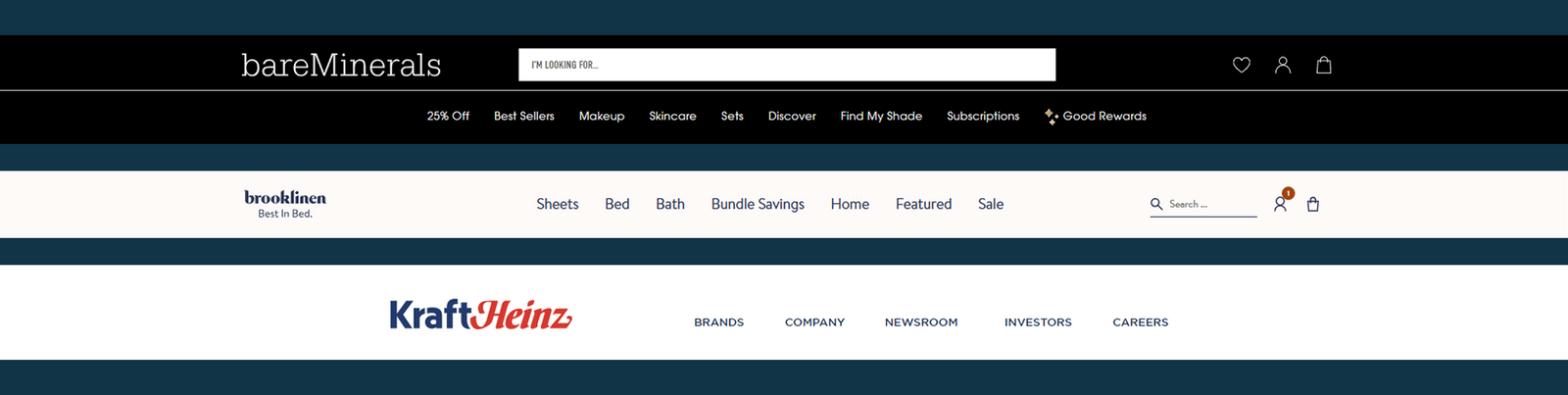
Brooklinen, bareMinerals, Carrier, Laura Mercier, and Kraft Heinz have all moved to unified platforms running B2B and DTC from a single admin and data layer.
The case study pattern is consistent: pre-unification, these brands reported wrong prices surfacing to B2B buyers, manual order entry bottlenecks, and inventory errors caused by imperfect syncs between systems. Post-unification, they report lower total cost of ownership, better data consistency, and accurate pricing and inventory across all sales channels.
Shopify Plus and BigCommerce are the two platforms most commonly cited for supporting this architecture, managing multiple storefronts and buying experiences from one backend, with one catalog, one inventory ledger, and one integration point for ERP and CRM.
Automation Is Eliminating Manual B2B Processes
A significant share of B2B volume is still processed via emails, spreadsheets, PDF order forms, and phone calls.
That’s not a competitive strategy. It’s technical debt that compounds every month.
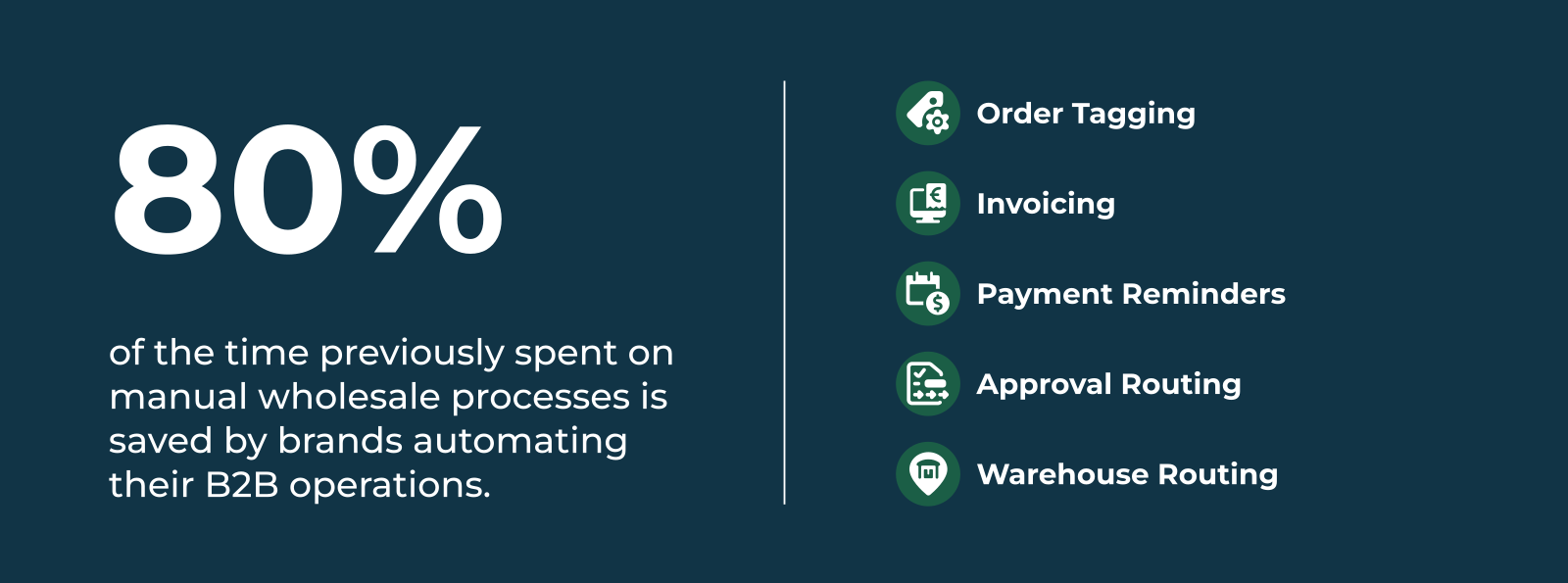
Brands automating their B2B operations report savings of around 80% of the time previously spent on manual wholesale processes. Sales teams that used to spend the majority of their day on order entry and admin are now spending that time on account growth and strategic selling.
The automation playbook for B2B in 2026 looks like this:
- Automated order tagging in which orders tagged by channel, region, account tier, or VIP status the moment they’re placed
- Automated invoicing in which invoices generated and sent on fulfillment without manual intervention
- Automated payment reminders to trigger when net-term invoices approach or pass due dates
- Automated approval routing in which carts flagged for manager review based on order value or product type, routed to the right approver automatically
- Automated warehouse routing when orders dispatched to the correct fulfillment location based on customer location or product type
AI-Powered Discovery
Here’s the trend most B2B sellers haven’t fully registered yet.
B2B buyers are increasingly researching suppliers via AI tools (ChatGPT, Perplexity, Gemini) before they ever visit a vendor’s website. They’re asking AI assistants to find products, compare suppliers, and surface the right SKUs for their requirements.
If your B2B catalog isn’t structured, indexed, and exposable to these tools, you’re invisible in the channel where your buyers are starting their journey.
This is showing up in two ways:
Natural-language search on your own platform. Buyers searching for “stainless 10mm outdoor bolts” instead of a part number should get the right result without needing to know your taxonomy. AI-driven semantic search makes this work even in large, complex catalogs.
AI catalog exposure externally. Structuring your product data so AI shopping tools and assistants can surface your catalog in response to buyer queries. This is a new distribution channel that didn’t exist three years ago and is growing fast.
In both cases, the underlying requirement is the same: clean, complete, well-structured product data. AI search built on incomplete or inconsistent catalog data still fails.
The brands investing in catalog data quality and AI-ready product structure today are building a discovery advantage that will compound for years.
The Bottom Line
Seven trends. One underlying direction.
B2B commerce is moving online, moving toward self-service, moving toward personalization, and moving toward automation all at once. And AI is adding an entirely new discovery layer on top.
The brands that adapt to all seven trends aren’t just staying competitive. They’re pulling away from the majority of B2B sellers who are still running on manual processes, generic catalogs, and disconnected systems.